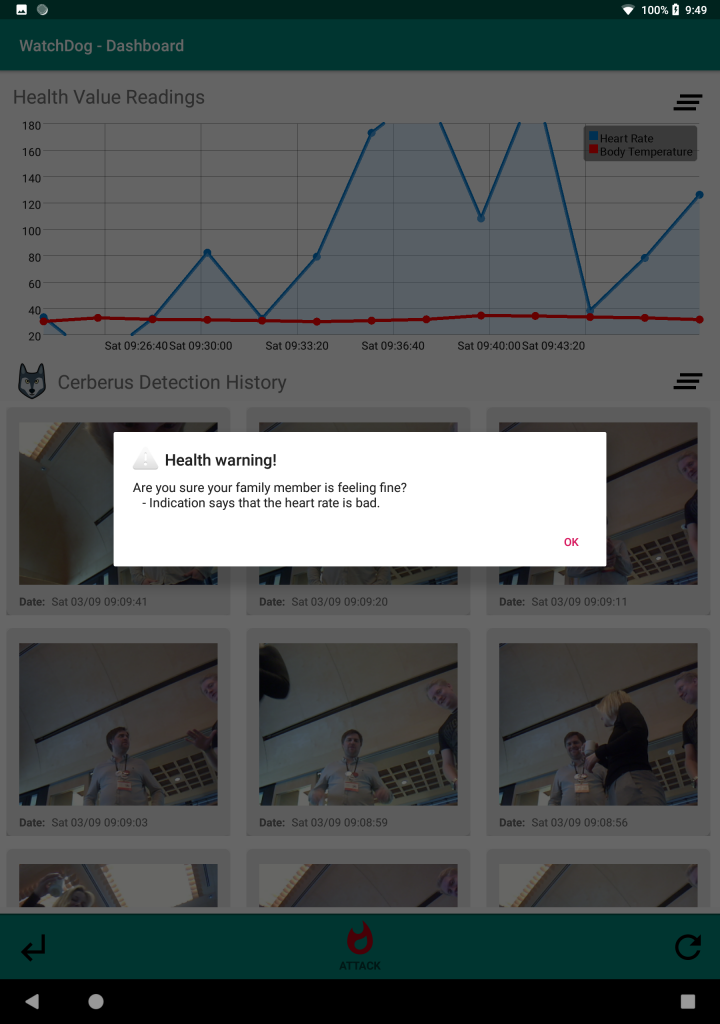
It has been a busy few days here at Voksenåsen for the APTIV team. We set out to create an amazing new security system, and I’d say we succeeded pretty well.
The system consists of four components:
- Guard dog system
- Cloud application
- Android application
- Wearable monitor
Imagine you had a guard dog at home. What would you like it to do? Send you pictures of people entering the house, of course. And maybe attack them, on command. Three of the above components together provide those service. Let’s go through them.
The guard dog
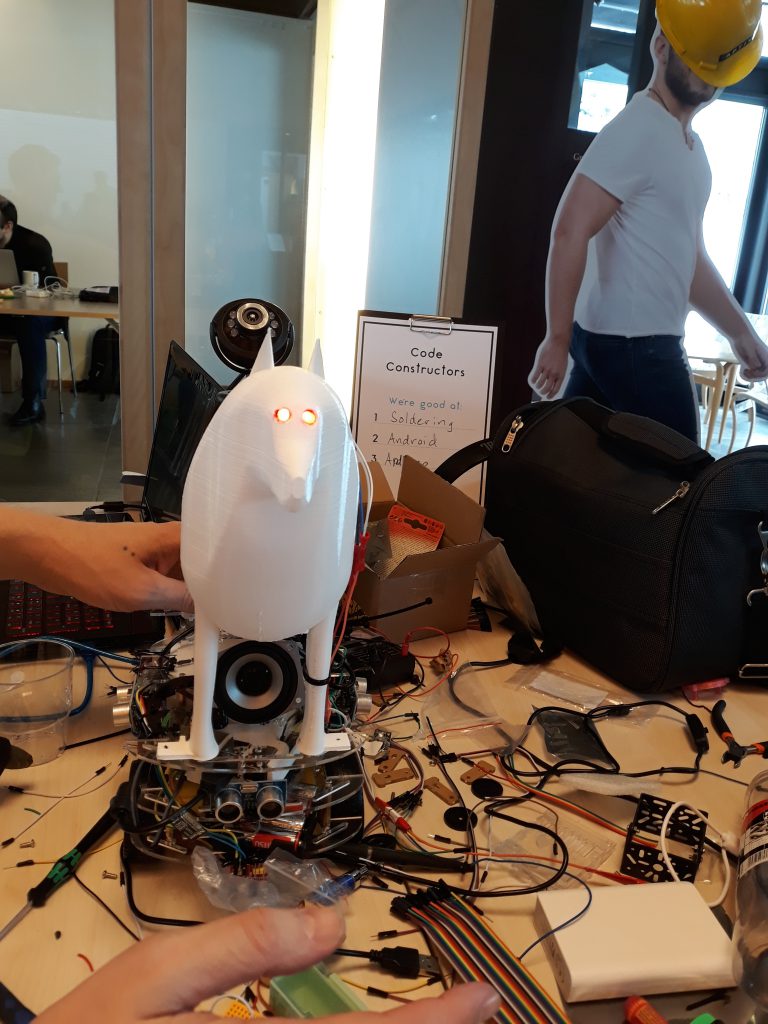
Central to our solution, the guard dog’s purpose is to monitor your home. Whenever something triggers any of the side or front ultrasonic sensors, the dog takes a picture in the direction. It then sends that picture up to…
The cloud
The cloud is simply used as storage for images and sensor data (we’ll get to that data later). Due to some very quick coding as well as storage issues, the images are deleted immediately after they are fetched by…
The application
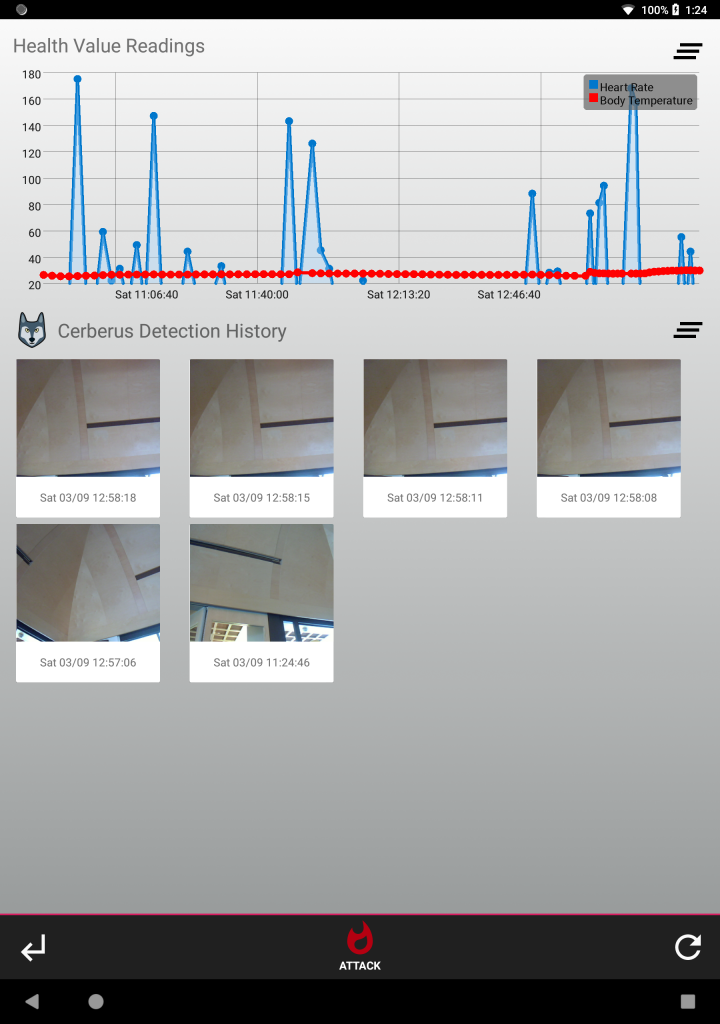
The application presents the images in a scrollable 4-by-X grid, where the user can also long-press an image to bring it up full-size. It also presents the data retrieved from the wearable device in a stylish graph at the top.
If an intruder has been detected since the last time the app was open, or if one is detected while it is open, a notification will pop up in the manner seen in the image below.
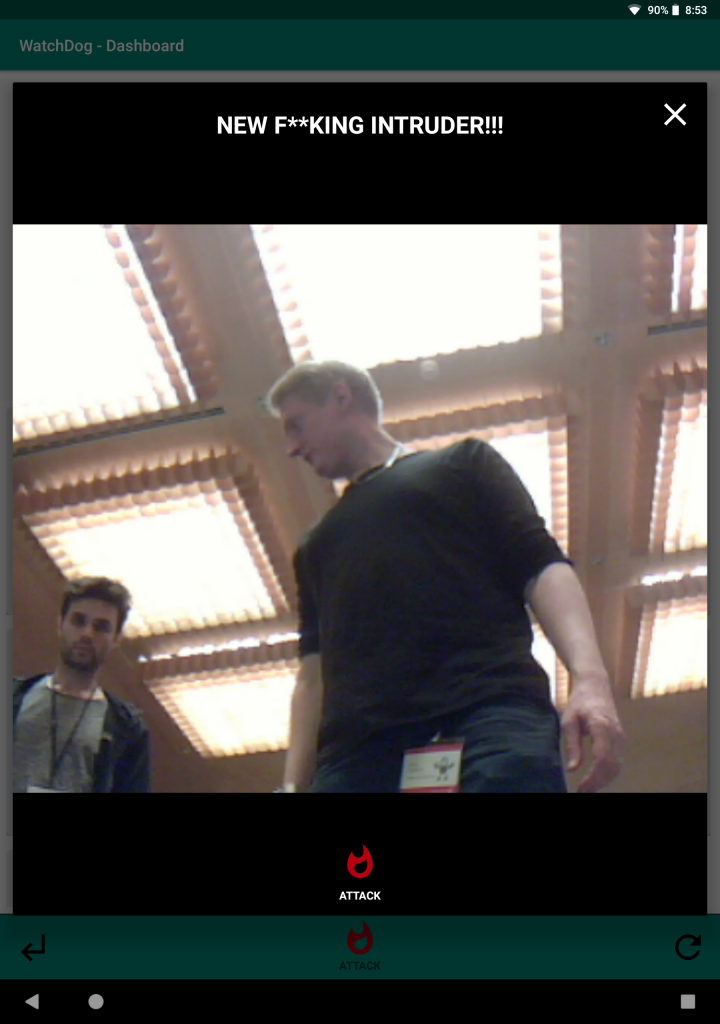
The attack button is present both on the normal screen and the popup, so that at any time the user can press it without needing to pass through different menus. Clicking on this button signals the guard dog to go into attack mode, driving towards the intruder and when it reaches them, to spin around while barking.
So, the final piece of the solution:
The wearable
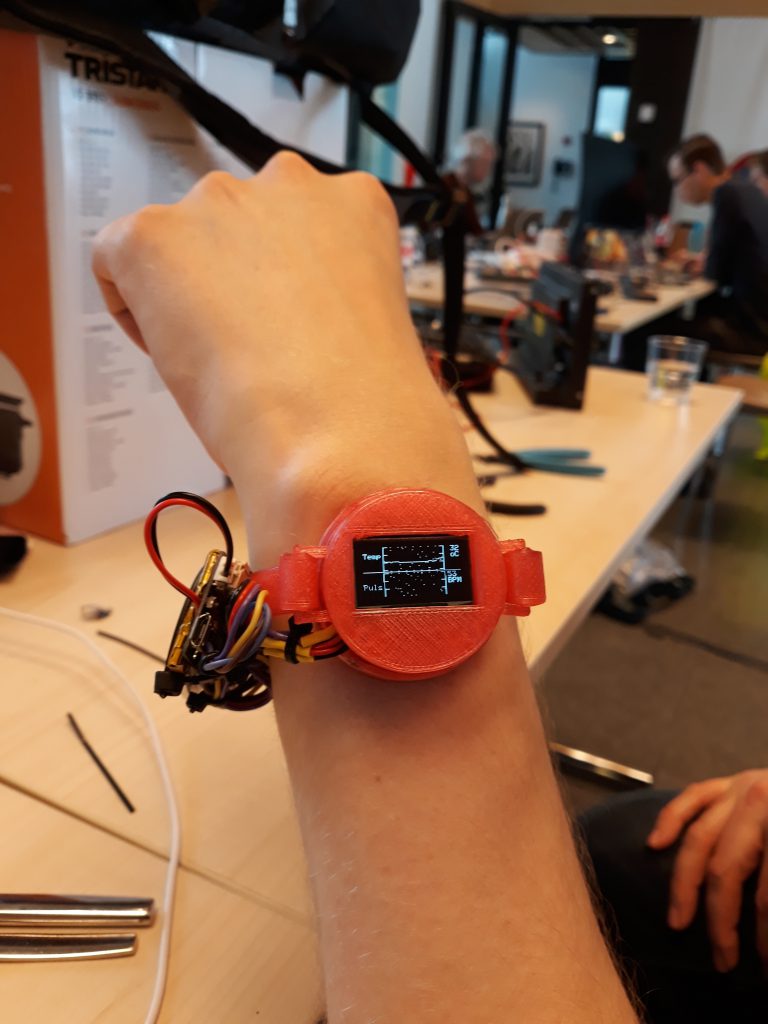
The wearable has two jobs: to monitor pulse and temperature from a subject and to relay that information up to the cloud. It does this through a temperature sensor and pulse sensor, attached to the bottom of the “watch”, connected to a wemos D32 microcontroller.
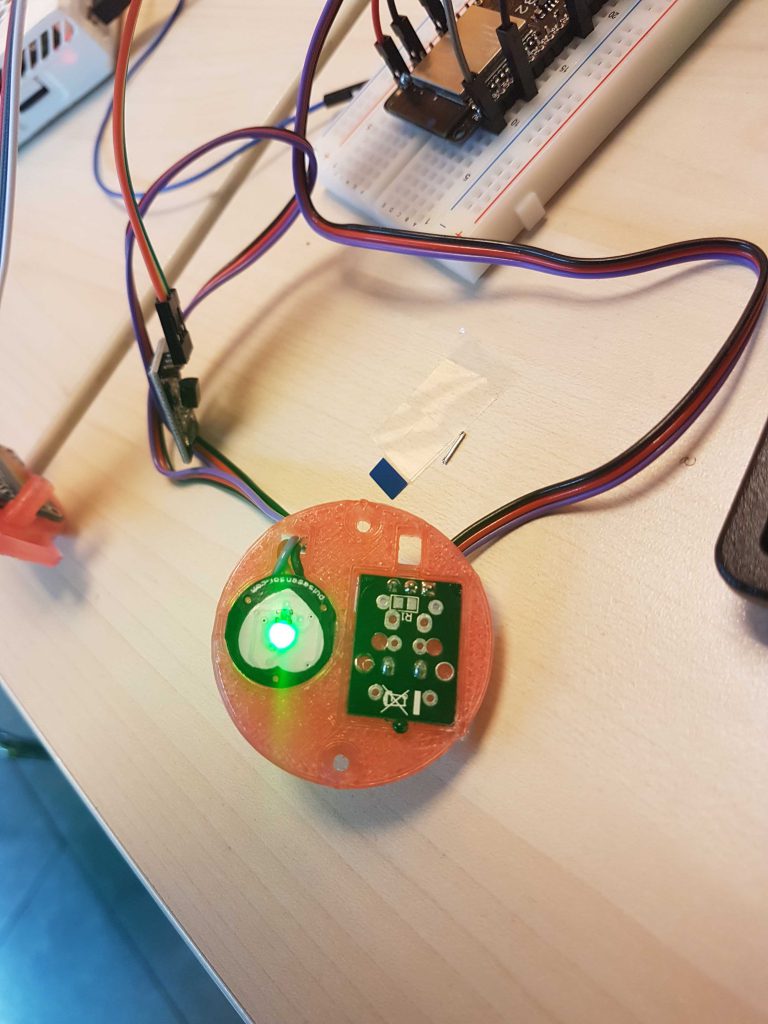
If the pulse and/or temperature goes outside of a pre-set interval, the application will be notified.