
After two and a half days of intense coding, hacking, soldering and much more, we ended up with a functioning smart biking helmet, with functionality pretty close to what we imagined when we started out. And it even got us the first prize in ARIoT 2019! So what does the finished product look like?
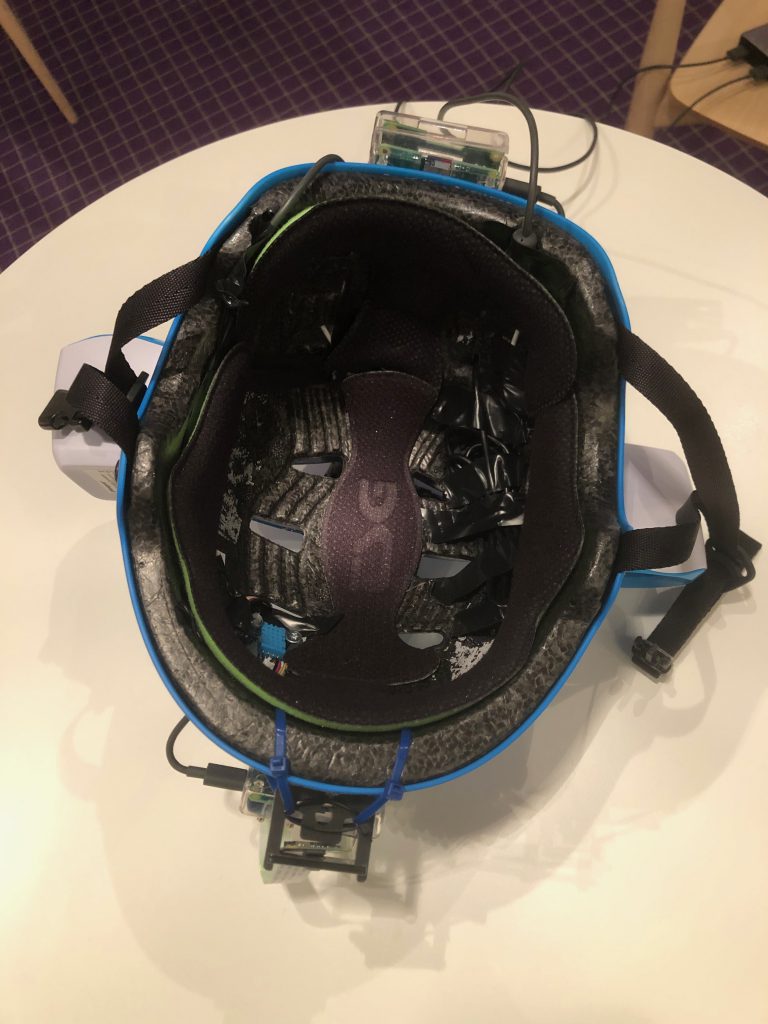

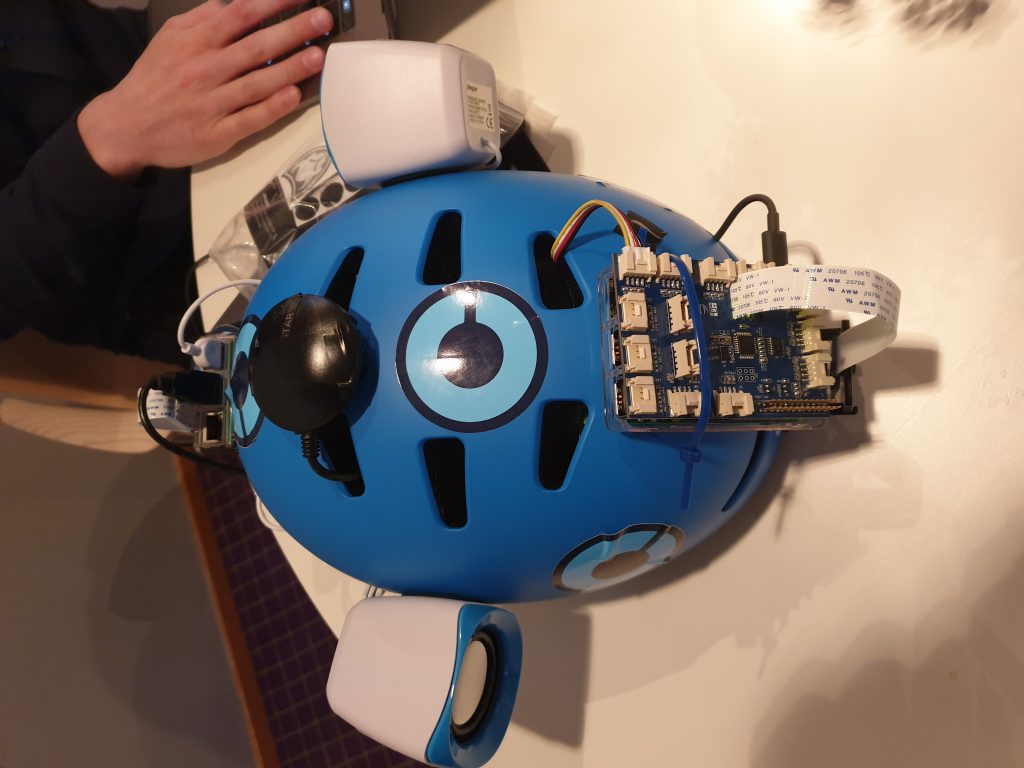
This is our SmartHjelm in all its glory. Complete with a GPS-receiver on top, speakers for information and warning, indicator and stop light, rear camera connected to our smartphone app, accelerometer, weather and body-temperature and humidity sensors, and a front-facing camera for object detection and warning. Notice how all the wiring has been elegantly hidden and the clean look of the helmet, both inside and out?
So how does this amazing unison of hardware and software work? The accelerometer is used to automatically trigger the breaking light in the event of a sudden decrease in speed as demonstrated by Simen in the video below.
Other than the breaking light, most of the features of SmartHjelm is controlled by the app.
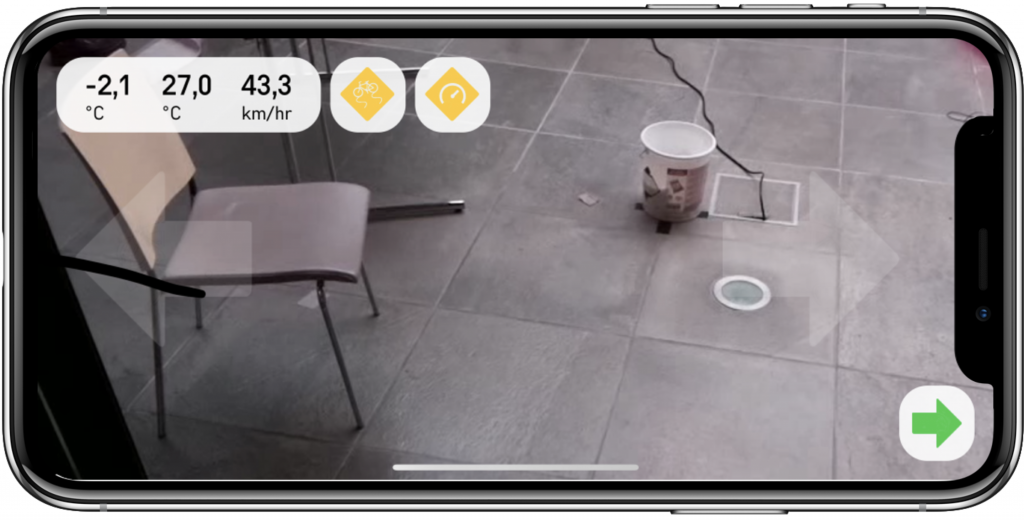
In the top left corner we have the outdoor temperature, as given by the weather forecast for the current GPS-coordinates, then the local temperature measured at the wearer’s forehead to provide useful health information, and the speed, as measured by the GPS. There are also a couple of warning symbols, one for slippery roads, which is shown if the temperature is measured to be below 3 C, and one for speed, which is yellow for speeds > 35 km/h and red for speeds > 45 km/h.
The screen also has two buttons, as indicated by the shaded arrows on the camera feed. Pressing these will activate the indicator light on the back of the helmet. While the indicator light is active, a green arrow will also be shown on the phone display, as shown above. Below, Simen demonstrates the turn signal feature.
If this was not enough, the SmartHjelm also has a front-facing camera, which uses the Google Vision API to detect stop signs. If it detects a stop sign, a blinking red light is shown at the back of the helmet. Pretty neat!
All of the sensor data gathered from the SmartHjelm is streamed directly to Elasticsearch, running on Google Cloud. The data is shown in a dashboard in Kibana, where the user can get a nice overview of all the sensor data.
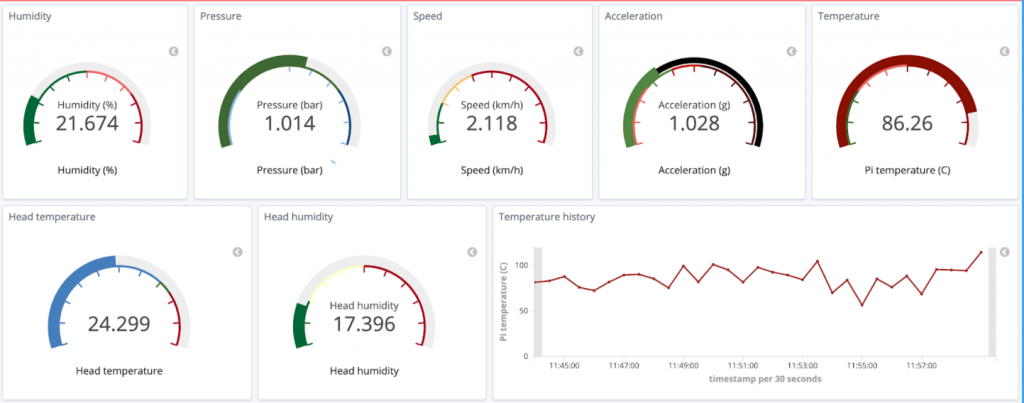
As if that is not enough, we can even apply machine learning to this data, both to detect outliers in the data, such as abnormal sweating events as measured by the humidity sensor on the forehead of the SmartHjelm, or predict how much the wearer will sweat in the future.
We are pretty happy with what we were able to create in the two and a half intensive days at Voksenåsen Culture and Conference Hotel in March 2019. We had an enormous amount of fun and food, and when the fog lifted the view from the hotel balcony was stunning. See you next year!